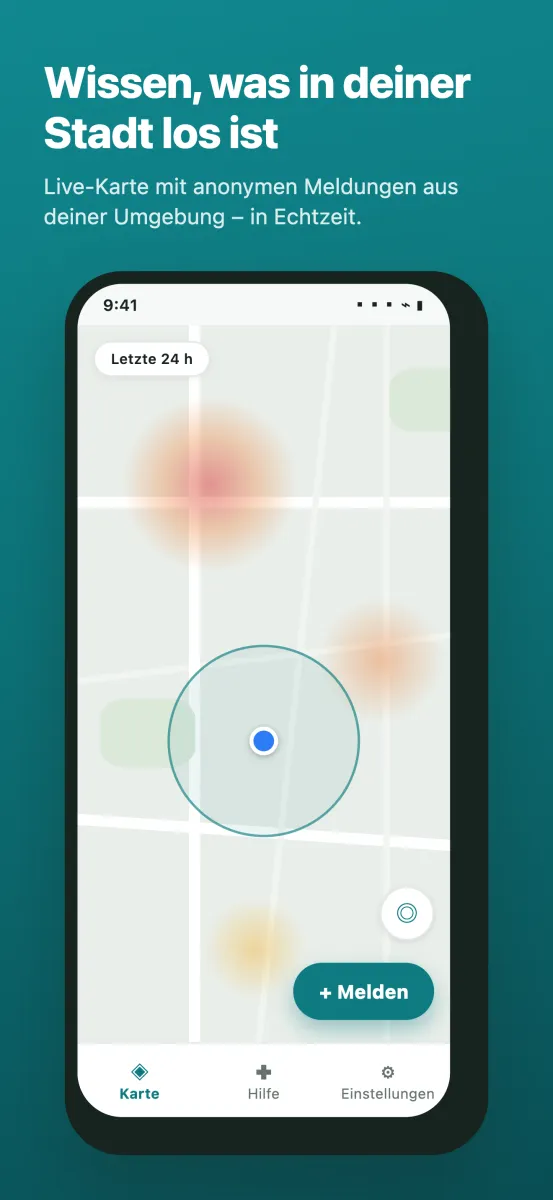



Software studio · Bielefeld, Germany · open for projects

We build software as if it were our own.

Three of our apps are live in the app stores and on the web. We build your app, internal tool or missing integration with the same tools and the same care.

Start a project See our apps
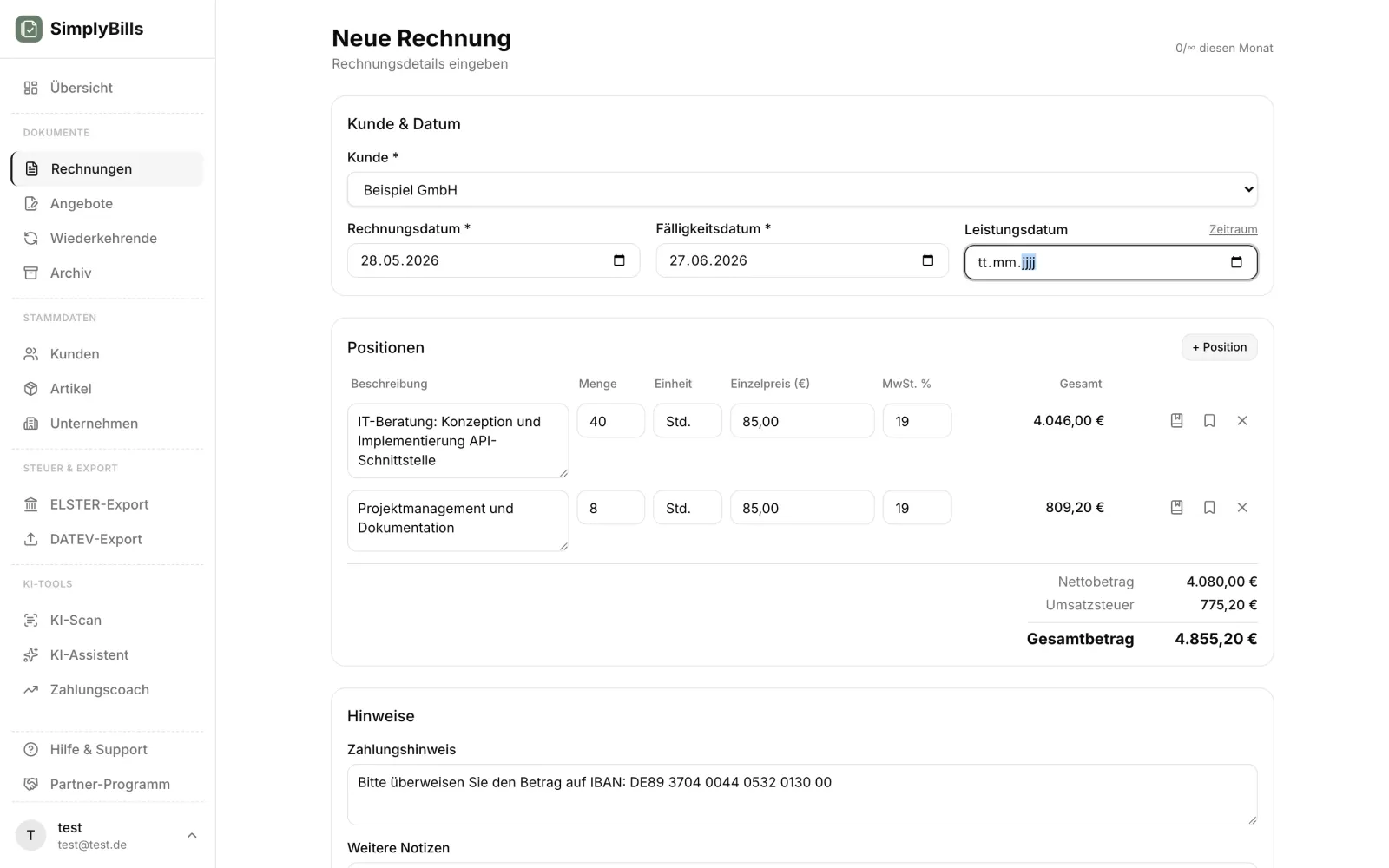
simplybills.de
SimplyBills: creating a new invoice
Small Steps: gold styleSmall Steps: constellation styleOur flagshipSimplyBillsE-invoices in 2 minutes
3
of our own apps live
Hundreds
automated tests
2
stores: App Store and Google Play
2 business days
until you hear back from us
Services

Three ways to work with us.

A new product, extra hands for your team or a tool for your operations: you work with people who run software themselves.

01

Custom Apps

From the first sketch to the app in the store. Design, development, backend and release from one team.

  • Concept and spec before the first line of code
  • iOS, Android and web from one codebase
  • Store submission, in-app purchases and subscriptions
  • Operations and updates after launch
ExpoNext.jsSupabase

02

Project Work

You have a team, but not enough hands. Or a module nobody wants to touch. We join, deliver in clear stages and hand over cleanly.

  • Single features or whole modules
  • Migrations, for example to new Expo or Next.js versions
  • Adding tests where there are none yet
  • Handover with docs, so your team can carry on
SprintsMigrationCode review
03

Custom IT Solutions

When off-the-shelf tools fall short: integrations, automation, internal dashboards. Often these are small tools that save hours every week.

  • Integrations between systems that don't talk to each other
  • Internal dashboards, for example for revenue and receipts
  • AI automation where it actually takes work off your plate
  • Hosting and deployment on your own infrastructure
IntegrationAutomationDevOps
How we work

How we build software.

Every project goes through the same six steps. AI agents take a lot of manual work off our hands. We decide what gets built and what goes live.

esbm · how-we-work
  1. $ concept.md01

    Concept

    Who is it for, and what does version 1 need to do? The result is a short document you can read in ten minutes.

  2. $ spec.md02

    Specification

    Screens, data model, interfaces and the awkward edge cases. You sign off on the spec before we write code.

  3. $ plan.md03

    Plan

    We break the spec into small tasks, each with its own test. A second agent reviews the plan and looks for gaps.

  4. $ npm test04

    Build

    Test first, then code. Specialised agents write, debug and look up current framework docs. We steer and read along.

  5. $ verify05

    Review

    A review agent without write access tests the result from the outside. Then a human reads the code before anything gets merged.

  6. $ release06

    Release and operations

    Builds via EAS and Coolify, store uploads by script. Sentry reports errors, often before anyone notices them.

Own products

Three apps, all live.

We run our own products. So we know what store reviews, subscription logic and error alerts on a Sunday evening feel like.

AI

We work with AI every day. Here is what that looks like.

Everything on this list runs in our repos and apps today.

While building

  • 01Claude Code is part of every project. A CLAUDE.md in each repo describes the architecture, rules and commands, so the agent doesn't have to guess.
  • 02Each job has a specialised agent: searching the code, implementing, debugging, reviewing. Each one gets only the permissions it needs.
  • 03Through MCP, Sentry, Coolify and Google Search Console are wired straight into the agent. It sees real errors and real deploy logs.
  • 04Frameworks change faster than training data. So before writing code, the agent reads the docs for the exact version we use.

Inside our products

  • Small Steps
    gpt-image turns the scan of a baby's foot into a picture in one of seven art styles.
  • SimplyBills
    Mistral OCR reads invoices from PDFs. Our own MCP server lets ChatGPT or Claude create invoices directly.

Our rules

  • No code without tests and review.
  • A human decides what gets merged and what goes live.
  • The data decides the model. Invoice data is processed by Mistral in Paris.
  • AI features have budgets and limits, so costs stay predictable.
Stack

What we build with.

We run this stack every day in three live apps. We know its strengths and its quirks.

Mobile
ExpoReact NativeTypeScriptSwift (ARKit)
Web
Next.jsReactTailwindshadcn/ui
Backend
HonoFastifyNode.jsBun
Data
SupabasePostgresPostGISH3
Payments
RevenueCatStripe
Operations
CoolifyHetznerEASSentry
AI
Claude CodeOpenAIMistralMCP
Privacy

We plan for privacy from day one.

01

Data in Frankfurt

The databases for NoGo and SimplyBills run on Supabase in Frankfurt am Main.

02

Rules in the database

Postgres row level security decides who can read which row. A bug in the frontend doesn't expose all the data at once.

03

Deletion deadlines

Reports in NoGo expire automatically.

04

Only what's needed

NoGo works without an account. We only ask for data a feature actually needs.

Let's talk

You have an idea. We build it.

Tell us what it's about. We reply within two business days.

team@esbm-solutions.com
Error: Please enter your name.
Error: Please enter a valid email address, for example name@example.com.
Error: Please briefly describe what it's about.